Buy business-talent.com ?
We are moving the project
business-talent.com .
Are you interested in purchasing the domain
business-talent.com ?
domain@kv-gmbh.de · 0541-91531010
Buy business-talent.com ?
Is there a difference between a rectifier and a bridge rectifier?
Yes, there is a difference between a rectifier and a bridge rectifier. A rectifier is a device that converts alternating current (AC) to direct current (DC) by allowing current to flow in only one direction. A bridge rectifier is a type of rectifier that uses four diodes in a bridge configuration to rectify AC voltage. The main difference is that a bridge rectifier is more efficient and can handle higher currents compared to a simple rectifier. **
What is the difference between a center-tapped rectifier and a bridge rectifier?
A center-tapped rectifier uses a transformer with a center tap on the secondary winding, while a bridge rectifier uses a configuration of diodes to rectify the AC input voltage. The center-tapped rectifier requires a transformer with a center tap, which may be more expensive and bulky, while the bridge rectifier does not require a center-tapped transformer and is more commonly used in practical applications. Additionally, the center-tapped rectifier only uses two diodes, while the bridge rectifier uses four diodes, making it more efficient in terms of voltage drop and power loss. **

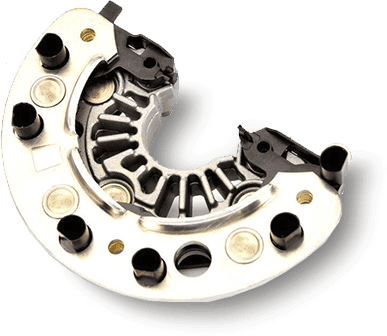
Similar search terms for Rectifier
Top-Angebote
Products related to Rectifier:
-
Harvard Business Review Press Harvard Business Review HBR’s 10 Must Reads 5 Book Collection Set – Essential Business, Leadership & Management GuidesHBR's 10 Must Reads 5 Books Collection Set Description On Emotional Intelligence If you read nothing else on emotional intelligence; read these 10 articles by experts in the field. We euro; ve combed through hundreds of articles in the Harvard Business Review archive and selected the most important ones to help you boost your emotional skills euro; and your professional success. Mental Toughness If you read nothing else on mental toughness; read these ten articles by experts in the field. We've combed through hundreds of articles in the Harvard Business Review archive and selected the most important ones to help you build your emotional strength and resilience--and to achieve high performance. The Essentials Change is the one constant in business; and we must adapt or face obsolescence. Yet certain challenges never go away. That's what makes this book 'must read.' These are the 10 seminal articles by management's most influential experts; on topics of perennial concern to ambitious managers and leaders hungry for inspiration--and ready to run with big ideas to accelerate their own and their companies' success. Change Management If you read nothing else on change management; read these 10 articles (featuring 'Leading Change; euro; by John P. Kotter). We've combed through hundreds of Harvard Business Review articles and selected the most important ones to help you spearhead change in your organization. Strategy If you read nothing else on strategy; read these 10 articles (featuring 'What Is Strategy? euro; by Michael E. Porter). We've combed through hundreds of Harvard Business Review articles and selected the most important ones to help you catalyze your organization's strategy development and execution.37,98 £*Shipping: 0,00 £Secure redirect to the provider


-
How does a rectifier work?
A rectifier is an electrical device that converts alternating current (AC) to direct current (DC). It does this by utilizing diodes, which are electronic components that only allow current to flow in one direction. When the AC current passes through the rectifier, the diodes block the negative portion of the wave, allowing only the positive portion to pass through, resulting in a pulsating DC output. This pulsating DC can then be smoothed out using capacitors to create a more stable DC output. **
-
What is a full-wave rectifier?
A full-wave rectifier is an electronic circuit that converts alternating current (AC) to direct current (DC). It uses two diodes to allow both the positive and negative halves of the AC input signal to flow through, resulting in a more efficient conversion compared to a half-wave rectifier. This type of rectifier is commonly used in power supplies and other electronic devices to provide a steady DC output. **
-
How can one bypass a rectifier?
Bypassing a rectifier involves connecting the AC input directly to the DC output, effectively bypassing the rectification process. This can be done by physically connecting the AC input terminal to the DC output terminal using a wire or jumper. However, bypassing a rectifier is not recommended as it can damage the circuit or device by allowing unregulated AC voltage to pass through the system. It is important to follow proper safety precautions and consult with a professional before attempting to bypass a rectifier. **
-
When should a rectifier be used?
A rectifier should be used when there is a need to convert alternating current (AC) to direct current (DC). This is commonly required in electronic devices and power supplies that operate on DC power. Rectifiers are essential in ensuring that the correct type of electrical current is supplied to the device, preventing damage or malfunction. They are commonly used in various applications such as battery charging, signal processing, and power transmission. **


How does this rectifier work exactly?
A rectifier works by converting alternating current (AC) into direct current (DC). It does this by using diodes, which are electronic components that allow current to flow in only one direction. When the AC current passes through the diodes, they effectively "chop off" the negative portion of the wave, leaving only the positive portion to create a pulsating DC output. This pulsating DC can then be smoothed out using capacitors to create a more steady DC output. Overall, the rectifier allows for the conversion of AC to DC, which is essential for many electronic devices and power systems. **
What is a center-tap rectifier?
A center-tap rectifier is a type of full-wave rectifier circuit that uses a center-tapped transformer to convert alternating current (AC) to direct current (DC). The center-tapped transformer has a secondary winding with a center tap, which allows for the creation of two separate but equal voltage outputs. This configuration allows for both halves of the input AC waveform to be used, resulting in a more efficient conversion of AC to DC compared to a half-wave rectifier. Center-tap rectifiers are commonly used in power supply circuits for electronic devices. **
Top-Angebote
Products related to Rectifier:
-
Is there a difference between a rectifier and a bridge rectifier?
Yes, there is a difference between a rectifier and a bridge rectifier. A rectifier is a device that converts alternating current (AC) to direct current (DC) by allowing current to flow in only one direction. A bridge rectifier is a type of rectifier that uses four diodes in a bridge configuration to rectify AC voltage. The main difference is that a bridge rectifier is more efficient and can handle higher currents compared to a simple rectifier. **
-
What is the difference between a center-tapped rectifier and a bridge rectifier?
A center-tapped rectifier uses a transformer with a center tap on the secondary winding, while a bridge rectifier uses a configuration of diodes to rectify the AC input voltage. The center-tapped rectifier requires a transformer with a center tap, which may be more expensive and bulky, while the bridge rectifier does not require a center-tapped transformer and is more commonly used in practical applications. Additionally, the center-tapped rectifier only uses two diodes, while the bridge rectifier uses four diodes, making it more efficient in terms of voltage drop and power loss. **
-
How does a rectifier work?
A rectifier is an electrical device that converts alternating current (AC) to direct current (DC). It does this by utilizing diodes, which are electronic components that only allow current to flow in one direction. When the AC current passes through the rectifier, the diodes block the negative portion of the wave, allowing only the positive portion to pass through, resulting in a pulsating DC output. This pulsating DC can then be smoothed out using capacitors to create a more stable DC output. **
-
What is a full-wave rectifier?
A full-wave rectifier is an electronic circuit that converts alternating current (AC) to direct current (DC). It uses two diodes to allow both the positive and negative halves of the AC input signal to flow through, resulting in a more efficient conversion compared to a half-wave rectifier. This type of rectifier is commonly used in power supplies and other electronic devices to provide a steady DC output. **
Similar search terms for Rectifier
-
Harvard Business Review Press Harvard Business Review HBR’s 10 Must Reads 5 Book Collection Set – Essential Business, Leadership & Management GuidesHBR's 10 Must Reads 5 Books Collection Set Description On Emotional Intelligence If you read nothing else on emotional intelligence; read these 10 articles by experts in the field. We euro; ve combed through hundreds of articles in the Harvard Business Review archive and selected the most important ones to help you boost your emotional skills euro; and your professional success. Mental Toughness If you read nothing else on mental toughness; read these ten articles by experts in the field. We've combed through hundreds of articles in the Harvard Business Review archive and selected the most important ones to help you build your emotional strength and resilience--and to achieve high performance. The Essentials Change is the one constant in business; and we must adapt or face obsolescence. Yet certain challenges never go away. That's what makes this book 'must read.' These are the 10 seminal articles by management's most influential experts; on topics of perennial concern to ambitious managers and leaders hungry for inspiration--and ready to run with big ideas to accelerate their own and their companies' success. Change Management If you read nothing else on change management; read these 10 articles (featuring 'Leading Change; euro; by John P. Kotter). We've combed through hundreds of Harvard Business Review articles and selected the most important ones to help you spearhead change in your organization. Strategy If you read nothing else on strategy; read these 10 articles (featuring 'What Is Strategy? euro; by Michael E. Porter). We've combed through hundreds of Harvard Business Review articles and selected the most important ones to help you catalyze your organization's strategy development and execution.37,98 £*Shipping: 0,00 £Secure redirect to the provider
-
MACMILLAN Leadership Strategy and Tactics: Learn to Lead Like a Navy SEALLeadership is the most challenging of human endeavours. It is often misunderstood. It can bewilder, mystify and frustrate even the most dedicated practitioners. Leaders at all levels are often forced to use theoretical guesswork to make decisions and lead their troops. It doesn’t have to be that way. There are principles that can be applied and tenets that can be followed. There are skills that can be learned and manoeuvres that can be practised and executed. There are leadership strategies and tactics that have been tested and proven on the battlefield, in business and in life. Retired Navy SEAL Officer Jocko Willink delivers his powerful and pragmatic leadership methodology that teaches how to lead any team in any situation to victory. Here, you will learn how to: * Deal with egos and the problems they cause * Earn and build trust with both your subordinates and superiors * Instil pride in your team, without creating arrogance * Overcome challenges presented by a micromanaging, indecisive or weak boss * Create a disciplined team that regulates itself * Use leadership as a tool to teach, mentor, train and correct behaviour of team members * Operate at a maximum level of efficiency – and reap the rewards . . . and more. This book is step one towards becoming the commander of your own life. The rest is up to you.8,99 £*Shipping: 2,99 £Secure redirect to the provider
-
Penguin The Personal MBA: The bestselling business book containing you everything you need to know about marketing, management and leadershipARE YOU TEMPTED TO GO TO BUSINESS SCHOOL? SAVE YOUR MONEY AND READ THE PERSONAL MBA INSTEAD. This bestselling business classic gives you everything you need to transform your business and your career. An MBA at a top business school is an enormous investment in time and cash. And if you don't want to work for a consulting firm or an investment bank, the chances are it simply isn't worth it. The Personal MBA gives you simple mental models for every subject that's key to commercial success. From the basics of products and marketing to the nuances of teamwork and systems, this book distils everything you need to know to take on the MBA graduates and win.10,99 £*Shipping: 2,99 £Secure redirect to the provider
-
How can one bypass a rectifier?
Bypassing a rectifier involves connecting the AC input directly to the DC output, effectively bypassing the rectification process. This can be done by physically connecting the AC input terminal to the DC output terminal using a wire or jumper. However, bypassing a rectifier is not recommended as it can damage the circuit or device by allowing unregulated AC voltage to pass through the system. It is important to follow proper safety precautions and consult with a professional before attempting to bypass a rectifier. **
-
When should a rectifier be used?
A rectifier should be used when there is a need to convert alternating current (AC) to direct current (DC). This is commonly required in electronic devices and power supplies that operate on DC power. Rectifiers are essential in ensuring that the correct type of electrical current is supplied to the device, preventing damage or malfunction. They are commonly used in various applications such as battery charging, signal processing, and power transmission. **
-
How does this rectifier work exactly?
A rectifier works by converting alternating current (AC) into direct current (DC). It does this by using diodes, which are electronic components that allow current to flow in only one direction. When the AC current passes through the diodes, they effectively "chop off" the negative portion of the wave, leaving only the positive portion to create a pulsating DC output. This pulsating DC can then be smoothed out using capacitors to create a more steady DC output. Overall, the rectifier allows for the conversion of AC to DC, which is essential for many electronic devices and power systems. **
-
What is a center-tap rectifier?
A center-tap rectifier is a type of full-wave rectifier circuit that uses a center-tapped transformer to convert alternating current (AC) to direct current (DC). The center-tapped transformer has a secondary winding with a center tap, which allows for the creation of two separate but equal voltage outputs. This configuration allows for both halves of the input AC waveform to be used, resulting in a more efficient conversion of AC to DC compared to a half-wave rectifier. Center-tap rectifiers are commonly used in power supply circuits for electronic devices. **
* All prices are inclusive of VAT and, if applicable, plus shipping costs. The offer information is based on the details provided by the respective shop and is updated through automated processes. Real-time updates do not occur, so deviations can occur in individual cases. ** Note: Parts of this content were created by AI.