Buy business-talent.com ?
We are moving the project
business-talent.com .
Are you interested in purchasing the domain
business-talent.com ?
domain@kv-gmbh.de · 0541-91531010
Buy business-talent.com ?
Is the talent for logical-abstract thinking genetically determined?
The talent for logical-abstract thinking is believed to have a genetic component, as research has shown that certain cognitive abilities can be inherited. However, environmental factors such as education, upbringing, and experiences also play a significant role in the development of this talent. Therefore, while genetics may predispose individuals to excel in logical-abstract thinking, it is not solely determined by genetics and can be influenced by various external factors. **
What is the difference between entrepreneurship, business administration, and international management?
Entrepreneurship focuses on identifying and pursuing opportunities to create new ventures or innovate within existing organizations. Business administration involves the management and operation of a business, including functions such as finance, marketing, and human resources. International management, on the other hand, deals with the challenges and opportunities of managing businesses that operate across different countries and cultures, requiring a deep understanding of global markets and international business practices. Each field has its unique focus and skill set, but they are all interconnected and essential for successful business operations in today's global economy. **

Similar search terms for Thinking
Top-Angebote
Products related to Thinking:
-
Inspire Picks Magnetic Chess Board Game For Kids Strategy And Logical Thinking Fun ats30527 ASpark curiosity and sharpen young minds with a classic challenge made kidfriendly. This engaging magnetic chess board game helps children develop focus, patience, and problemsolving skills while having fun. Designed as a thoughtful educational logic...47,95 $*Shipping: 0,00 $Secure redirect to the provider

-
Is cognitive development, also known as thinking development, fully matured at 11 years old?
Cognitive development, or thinking development, is not fully matured at 11 years old. While significant progress has been made in cognitive abilities by this age, the brain continues to develop and change throughout adolescence and into early adulthood. Higher-order thinking skills, such as abstract reasoning, problem-solving, and decision-making, continue to develop well into the teenage years and beyond. Therefore, it is important to recognize that cognitive development is an ongoing process that extends beyond 11 years old. **
-
Is this still politics, instead of logical thinking emotional thinking?
While emotions can play a role in politics, it is ultimately a field that requires a balance of logical thinking and emotional intelligence. Political decisions are often based on a combination of facts, values, and public opinion, making it necessary to consider both rational arguments and emotional responses. Therefore, it is important for politicians and citizens alike to engage in critical thinking and thoughtful analysis when navigating political issues. **
-
What is the definition of hypothetical-deductive thinking and deductive thinking?
Hypothetical-deductive thinking is a problem-solving approach that involves creating a hypothesis or educated guess about a situation and then testing it through deductive reasoning. Deductive thinking, on the other hand, is a logical process where one starts with a general statement or hypothesis and then examines the possibilities to reach a specific, logical conclusion. In essence, hypothetical-deductive thinking combines the generation of hypotheses with deductive reasoning to arrive at a solution, while deductive thinking focuses solely on drawing specific conclusions from general principles. **
-
What is the definition of hypothetico-deductive thinking and deductive thinking?
Hypothetico-deductive thinking is a scientific method that involves formulating a hypothesis and then testing it through observation and experimentation to reach a conclusion. It is a process of making educated guesses and then systematically testing them to determine their validity. Deductive thinking, on the other hand, is a logical process where conclusions are drawn based on a set of premises or assumptions. It involves reasoning from general principles to specific instances to reach a logical conclusion. **
What other types of thinking exist besides spatial and visual thinking?
Besides spatial and visual thinking, other types of thinking include analytical thinking, which involves breaking down complex problems into smaller, more manageable parts; critical thinking, which involves evaluating and analyzing information in a logical and systematic way; and creative thinking, which involves generating new and innovative ideas and solutions. Additionally, there is also abstract thinking, which involves understanding and conceptualizing ideas that are not necessarily tied to concrete objects or experiences. These different types of thinking can be used in combination to approach problems and tasks from various angles and perspectives. **
Is thinking too exhausting?
Thinking can be exhausting depending on the intensity and duration of the mental activity. Engaging in deep, complex, or prolonged thinking can drain mental energy and lead to fatigue. However, moderate and balanced thinking is essential for problem-solving, decision-making, and creativity. It is important to take breaks, practice mindfulness, and engage in activities that promote relaxation to prevent mental exhaustion. **
Top-Angebote
Products related to Thinking:
-
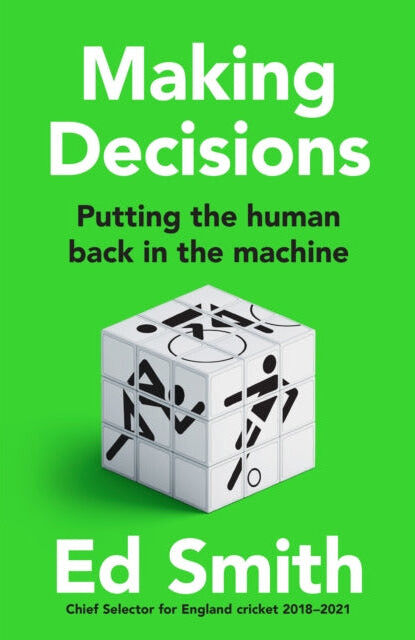
William Collins Making Decisions Book – Leadership, Judgement & Smart Thinking GuideWinning takes many forms. For fans of Matthew Syed, this is a great sports book about leadership, judgement and decision-making - rooted in the theory that helped Ed Smith lead England cricket to sustained success. And to help us all win more.'An absolutely fascinating book' THE GAME, The Times football pod How do you spot the opportunities that others miss?How do you turn a team's performance around?How do you make good decisions amid a tidal wave of information? And how can you improve? As chief selector for the England cricket team, Ed Smith pioneered new methods for building successful teams and watched his decisions tested in real time on the pitch. During his three-year tenure, England averaged 7 wins in every 10 completed matches, better than they have performed before or since. Making Decisions reveals Smith's unique approach to finding success in a fast-changing and increasingly data-reliant world.The best decisions, Smith argues, rely on a combination of differing kinds of intelligence: from algorithms to intuition. This is a truth that the most successful people know: data cannot account for everything, it must be harnessed with human insight. Whatever the power of data, humans aren't finished yet.Sharing for the first time the tools he introduced as England selector, Smith's book captures the immediacy of life at the sharp end, while also exploring frameworks from the top levels of sports, business and the arts. Decision-making is revealed as a creative enterprise, not a reductive system. Making Decisions offers an invaluable guide for those who want a better framework for developing, explaining and implementing new ideas.18,35 £*Shipping: 2,99 £Secure redirect to the provider
-
Discount Dollar Deals Childrens Intellectual Development Toy Clever Calculation, Logical Thinking, And Password Cracking Game For Kids Childrens Intellectual Development Toy Clever Calculation, Logical Thinking, And Password Cracking Game For KidsUnlock your child's full potential with this children's intellectual development toy. Designed to engage young minds, this game encourages clever calculation and sharpens logical thinking skills through fun, handson puzzles. Perfect for kids who...34,97 $*Shipping: 0,00 $Secure redirect to the provider
-
Inspire Picks Magnetic Chess Board Game For Kids Strategy And Logical Thinking Fun ats30527 ASpark curiosity and sharpen young minds with a classic challenge made kidfriendly. This engaging magnetic chess board game helps children develop focus, patience, and problemsolving skills while having fun. Designed as a thoughtful educational logic...47,95 $*Shipping: 0,00 $Secure redirect to the provider
-
Is the talent for logical-abstract thinking genetically determined?
The talent for logical-abstract thinking is believed to have a genetic component, as research has shown that certain cognitive abilities can be inherited. However, environmental factors such as education, upbringing, and experiences also play a significant role in the development of this talent. Therefore, while genetics may predispose individuals to excel in logical-abstract thinking, it is not solely determined by genetics and can be influenced by various external factors. **
-
What is the difference between entrepreneurship, business administration, and international management?
Entrepreneurship focuses on identifying and pursuing opportunities to create new ventures or innovate within existing organizations. Business administration involves the management and operation of a business, including functions such as finance, marketing, and human resources. International management, on the other hand, deals with the challenges and opportunities of managing businesses that operate across different countries and cultures, requiring a deep understanding of global markets and international business practices. Each field has its unique focus and skill set, but they are all interconnected and essential for successful business operations in today's global economy. **
-
Is cognitive development, also known as thinking development, fully matured at 11 years old?
Cognitive development, or thinking development, is not fully matured at 11 years old. While significant progress has been made in cognitive abilities by this age, the brain continues to develop and change throughout adolescence and into early adulthood. Higher-order thinking skills, such as abstract reasoning, problem-solving, and decision-making, continue to develop well into the teenage years and beyond. Therefore, it is important to recognize that cognitive development is an ongoing process that extends beyond 11 years old. **
-
Is this still politics, instead of logical thinking emotional thinking?
While emotions can play a role in politics, it is ultimately a field that requires a balance of logical thinking and emotional intelligence. Political decisions are often based on a combination of facts, values, and public opinion, making it necessary to consider both rational arguments and emotional responses. Therefore, it is important for politicians and citizens alike to engage in critical thinking and thoughtful analysis when navigating political issues. **
Similar search terms for Thinking
-
What is the definition of hypothetical-deductive thinking and deductive thinking?
Hypothetical-deductive thinking is a problem-solving approach that involves creating a hypothesis or educated guess about a situation and then testing it through deductive reasoning. Deductive thinking, on the other hand, is a logical process where one starts with a general statement or hypothesis and then examines the possibilities to reach a specific, logical conclusion. In essence, hypothetical-deductive thinking combines the generation of hypotheses with deductive reasoning to arrive at a solution, while deductive thinking focuses solely on drawing specific conclusions from general principles. **
-
What is the definition of hypothetico-deductive thinking and deductive thinking?
Hypothetico-deductive thinking is a scientific method that involves formulating a hypothesis and then testing it through observation and experimentation to reach a conclusion. It is a process of making educated guesses and then systematically testing them to determine their validity. Deductive thinking, on the other hand, is a logical process where conclusions are drawn based on a set of premises or assumptions. It involves reasoning from general principles to specific instances to reach a logical conclusion. **
-
What other types of thinking exist besides spatial and visual thinking?
Besides spatial and visual thinking, other types of thinking include analytical thinking, which involves breaking down complex problems into smaller, more manageable parts; critical thinking, which involves evaluating and analyzing information in a logical and systematic way; and creative thinking, which involves generating new and innovative ideas and solutions. Additionally, there is also abstract thinking, which involves understanding and conceptualizing ideas that are not necessarily tied to concrete objects or experiences. These different types of thinking can be used in combination to approach problems and tasks from various angles and perspectives. **
-
Is thinking too exhausting?
Thinking can be exhausting depending on the intensity and duration of the mental activity. Engaging in deep, complex, or prolonged thinking can drain mental energy and lead to fatigue. However, moderate and balanced thinking is essential for problem-solving, decision-making, and creativity. It is important to take breaks, practice mindfulness, and engage in activities that promote relaxation to prevent mental exhaustion. **
* All prices are inclusive of VAT and, if applicable, plus shipping costs. The offer information is based on the details provided by the respective shop and is updated through automated processes. Real-time updates do not occur, so deviations can occur in individual cases. ** Note: Parts of this content were created by AI.